
01
Find something you will actually want to watch
A playback number is not enough. Theme, mood, cast, platform, and watch access together make it easier to judge whether a short drama fits you.
SceneTrace connects clues across titles, cast, themes, platforms, and audience momentum. Viewers can find a better next watch; creators can see patterns taking shape; media and distribution teams can discover rising people and works.
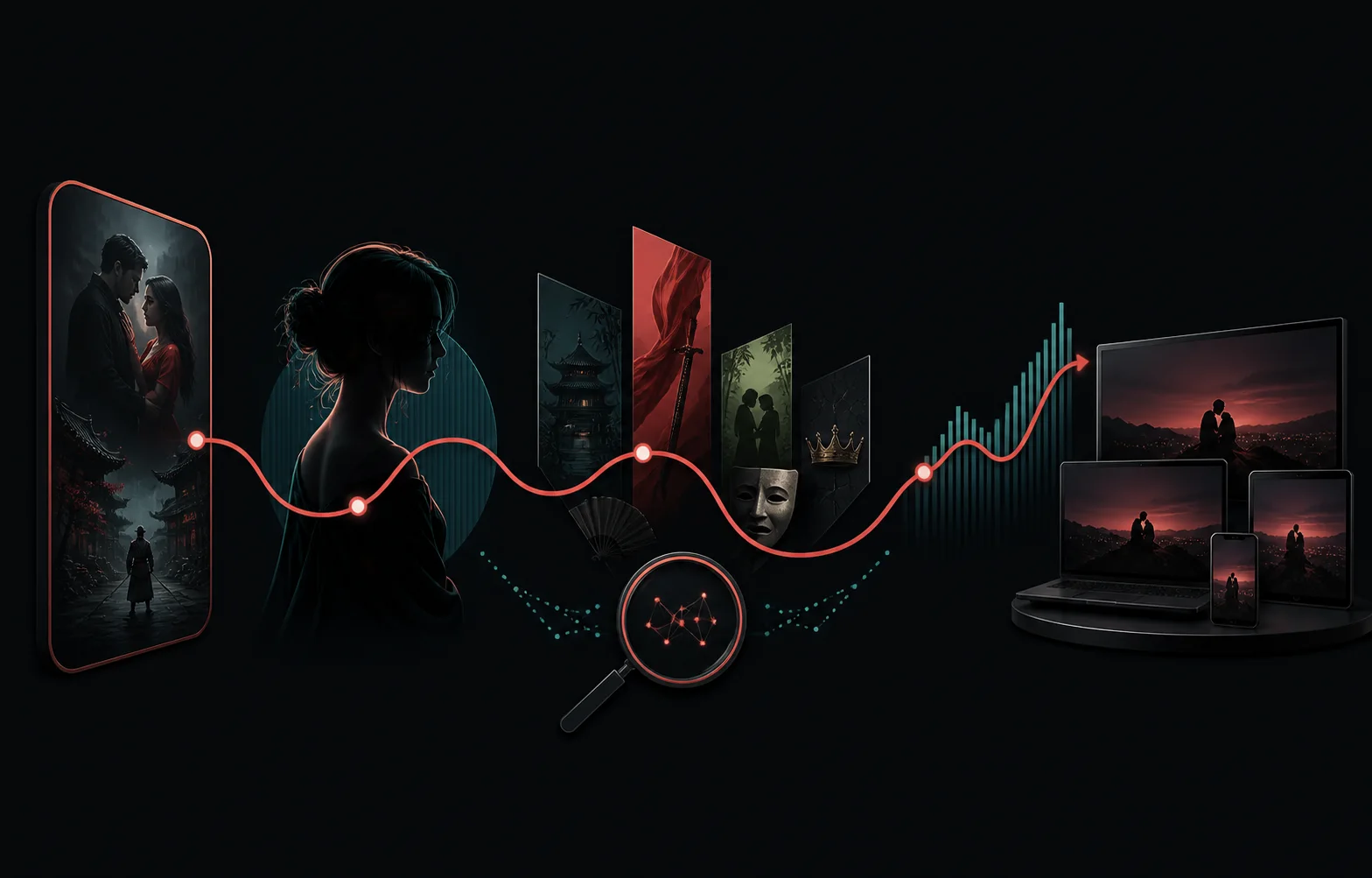
Titles, performers, themes, and watch access often live in different places. SceneTrace brings them back into one discovery flow, helping you move from “I think I saw this” to “this is the one,” then onward to what comes next.
A playback number is not enough. Theme, mood, cast, platform, and watch access together make it easier to judge whether a short drama fits you.
Rankings and the Short Drama Radar place current attention beside themes, story hooks, and audience interests so you can understand momentum instead of simply following it.
Recognize an actor through a role, find connected titles, then continue through themes and platforms—turning one chance encounter into a path worth exploring.
AI is most useful when it finds possible connections among works, performers, themes, and trends across many public signals. It makes search, comparison, and research faster; sources and editorial judgment still determine what we present.
Explore the AI short-drama rankingAI helps compare titles, aliases, pinyin, roles, and story descriptions so a vague search has a better chance of returning to the right work.
AI helps group themes and hooks that repeat across public rankings, search, social signals, and title metadata, giving creators a direction to evaluate for themselves.
When roles, connected titles, platform footprints, and momentum sit together, media and distribution teams can form stronger interview, casting, and collaboration shortlists.
Put simply: AI brings potentially related things together sooner. SceneTrace explains the connection and keeps uncertainty visible when the information is not strong enough.
Rankings reveal current attention without pretending that heat automatically means a title is good. Theme, execution, and audience fit still matter.
We aim to say which theme, mood, performer, or viewing condition makes a short drama worth considering for a particular audience.
When cast, identity, or trend signals remain thin, we keep the gap visible so discovery stays grounded in information that can be checked.
The same relationships among works, people, themes, and momentum answer different questions for different audiences.
If you have found a short drama worth watching, a performer on the rise, or an angle that genuinely helps audiences, tell us about it.