
Latest Trends in AI-Generated Short Dramas (2026)
AI short dramas are growing up: the decisive changes in 2026 are better continuity, repeatable story worlds, human-led production systems, and clearer rules for trust.
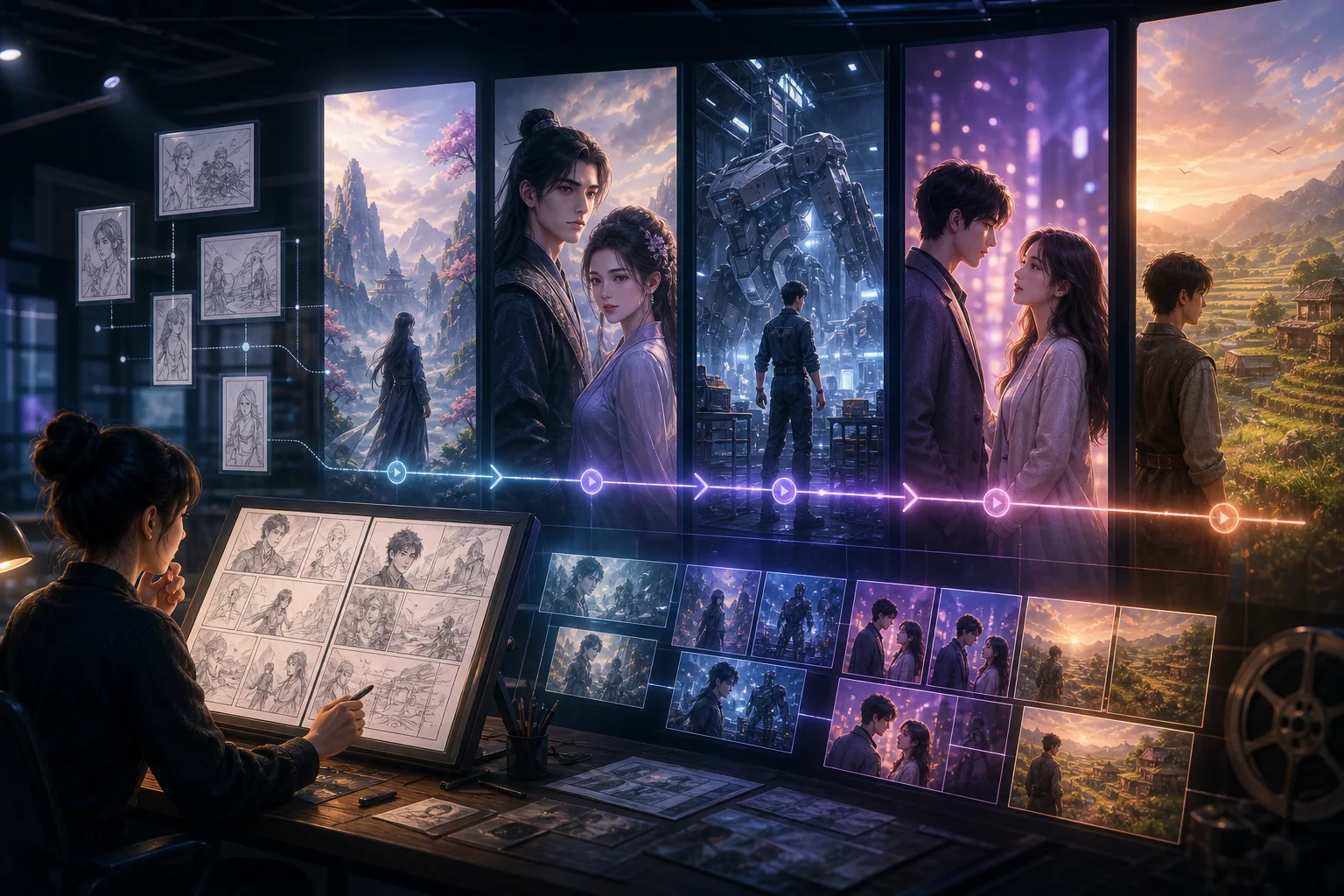
The 2026 shift: from generating clips to building shows
The first wave of AI video was easy to recognize. A beautiful shot would hold together for a few seconds, then a face, costume, prop, or camera direction would drift. That was enough for a demo. It was not enough for a drama.
In 2026, the center of gravity is moving from isolated spectacle to repeatable storytelling. The important questions are no longer simply whether a model can produce a convincing image. Producers now have to maintain a character across dozens of episodes, preserve the rules of a story world, create a reliable release rhythm, and give viewers a reason to return after the first hook.
This snapshot is current as of August 15, 2026 and focuses mainly on China, where the scale of AI micro-drama production makes the changes easiest to observe. It also separates supply from demand: more AI titles being released does not mean every title has found an audience.
Here are the seven trends that matter most.
1. AI animation is becoming its own entertainment category
AI-generated short drama is no longer just a cheaper version of live action. Its most durable branch is developing a visual and narrative identity closer to animated web fiction: vertical framing, rapid episodes, stylized characters, and worlds that can expand without the limits of physical sets.
That distinction matters. If a production is judged only by how perfectly it imitates a camera, every synthetic detail becomes a flaw. A more openly animated style gives creators room to establish a coherent visual language instead of chasing realism shot by shot.
The scale of production has risen quickly. People’s Daily Overseas reported that an industry guide counted roughly 128,000 micro-dramas released in the first quarter of 2026, about 122,000 of them categorized as AI micro-dramas. That figure describes an enormous supply experiment, not an equivalent number of hits. The scarcity has shifted from footage to attention.
For viewers, the useful signal is therefore not “made with AI.” It is whether a title has a recognizable art direction, a stable story engine, and enough editorial control to feel intentional.
2. Character consistency is now the baseline
The clearest technical change is continuity. Production teams increasingly treat characters, locations, costumes, and props as reusable assets rather than generating each shot from scratch. A lead character needs a controlled face, silhouette, wardrobe logic, voice, and movement vocabulary. A sword, house, vehicle, or family heirloom has to survive a scene change without becoming a different object.
This makes the workflow look less like prompting and more like virtual production. Teams build reference sheets, approve visual anchors, lock recurring environments, and inspect transitions before episodes are assembled. The model still generates material, but the production system decides what is allowed to vary.
Better continuity also changes what audiences notice. When faces stop drifting, viewers become more sensitive to performance: eye lines, emotional timing, body language, and whether a reaction actually matches the scene. Technical progress does not remove the need for direction. It raises the standard for it.
3. The strongest stories are built like games
Many breakout AI dramas are moving beyond one-season revenge and romance arcs toward systems that can keep producing goals. Cultivation levels, academy rankings, creature bonds, business expansion, resource gathering, clan rebuilding, and map exploration all create visible progress. Each episode can deliver a small win while a larger objective remains open.
That is why progression fantasy and “build a life from nothing” stories fit the format so well. The Paper’s analysis of two multi-season AI series describes how role-playing and simulation-style loops support six or seven seasons: a stronger enemy, a larger farm, a new territory, or a more demanding stage can extend the story without undoing the previous resolution.
The current SceneTrace catalog shows the same pattern. Can a Wild Girl Study Mecha Too? turns repair skill into measurable advancement. Su Yi Enters the Book builds its momentum through production, sales, and household security. Beast-Taming Academy uses bonds, training, and team techniques.
The common feature is not genre. It is a repeatable loop: attempt, feedback, improvement, and a larger next challenge.
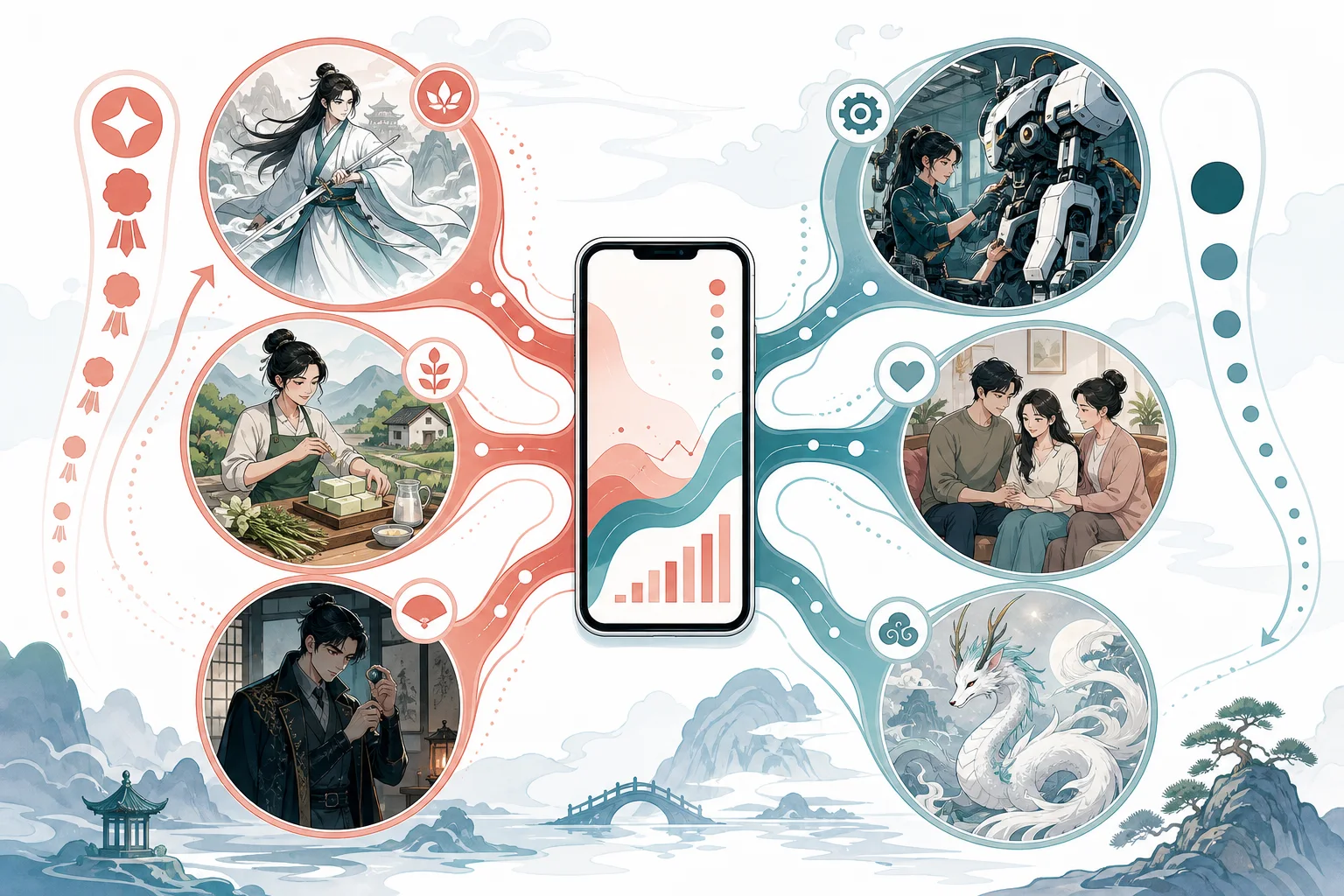
4. Long-running worlds are replacing disposable hooks
Short episodes do not have to mean short-lived intellectual property. Once a world has stable characters and a reliable progression loop, a successful first season can become the starting point for sequels, side stories, new locations, and upgraded visual assets.
This favors source material with more world than any single season can use. Web novels are a natural match because they arrive with character relationships, advancement systems, locations, and a deep backlog of plot. The adaptation challenge is not inventing more events. It is selecting a clear season goal and translating prose into visual beats that remain legible on a phone.
The result is a test-and-expand model. A first season establishes the premise and audience fit. Later seasons can increase the scale, refine designs, and follow the parts of the world that viewers respond to. SceneTrace’s August 2026 AI short-drama snapshot reflects that serial logic: most of its leading titles were already in a third season or beyond.
This is a more consequential change than faster rendering. It turns AI production from a sequence of isolated bets into the management of durable story assets.
5. Human creative work is moving upstream
Smaller teams do not mean no team. They mean that human effort is being concentrated earlier in the process and at the points where judgment matters most.
Producers are spending more time on premise selection, script structure, character bibles, visual references, shot priorities, and quality thresholds. They also have to decide which errors break a scene and which are invisible at vertical-video speed. In the People’s Daily reporting, one producer described her role shifting away from coordinating a physical crew and toward choosing scripts, evaluating specialist AI vendors, and controlling the finished work’s content and aesthetic.
That shift creates a new production bottleneck: taste. Generating ten versions of a shot is useful only if someone can identify the one that serves the story. A fast pipeline can multiply weak choices just as efficiently as strong ones.
The most capable teams are therefore not simply “using more AI.” They are designing tighter decision systems: fewer ambiguous prompts, stronger references, earlier rejection of weak shots, and clearer ownership of the final cut.
6. The winning workflow is hybrid, not fully automated
“Fully AI-generated” is a convenient label, but it hides how much assembly remains. Scripts may be drafted or adapted with language models. Character frames may come from image models. Video models create motion in short segments. Separate tools handle voices, music, sound design, lip sync, cleanup, editing, subtitles, and localization. Humans connect those systems and repair the seams.
The limits are still visible. The same People’s Daily investigation notes that emotional performance can feel unnatural, longer sequences are assembled from shorter generated clips, and continuity problems increase the amount of manual iteration required for premium work. Lower unit cost does not guarantee lower total cost if a scene must be regenerated repeatedly.
This explains why “one person can make a show” and “quality requires a production system” can both be true. AI lowers the minimum crew size and lets independent creators test ideas. Once a title needs a fixed release schedule, multiple languages, stronger sound, or a long season, coordination returns in a different form.
The durable advantage is orchestration: knowing which stages can be automated, where a reusable asset saves time, and where a human decision prevents ten downstream fixes.
7. Trust and provenance are becoming part of quality
As synthetic video becomes more convincing, disclosure and rights management move from legal footnotes into the viewing experience. Audiences want to know when a person, voice, or performance is synthetic. Platforms and distributors need to know that the production has permission to use its faces, source images, music, voices, and underlying story.
China’s Measures for Labeling AI-Generated and Synthetic Content, effective since September 1, 2025, distinguish visible labels from metadata-based hidden labels and place obligations on generation and distribution services. For producers, that makes provenance a pipeline requirement: permissions and source records have to survive export, editing, localization, and syndication.
Quality policy is tightening at the same time. In May 2026, the National Radio and Television Administration’s micro-drama quality initiative emphasized stronger writing, broader subject matter, international communication, and the shift from quantity toward better work. The initiative covers the wider micro-drama sector, but the signal for AI producers is direct. Speed is no longer a sufficient identity.
Trust will increasingly separate reusable IP from disposable content. A title that cannot document its characters, voices, and source material is harder to distribute, license, localize, or build into a long-running franchise.
What these trends mean for viewers
The best way to judge an AI short drama in 2026 is to ignore the production label for a moment and inspect the show itself.
- Check the first three episodes for continuity. Do the lead’s face, costume, voice, and relationships remain stable?
- Look for a story engine, not only a hook. Is there a repeatable form of progress after the initial reversal?
- Notice whether spectacle changes the story. A generated battle or fantasy landscape should create a decision, consequence, or new problem.
- Distinguish a finished season from a stream of clips. Episode order, arcs, and a satisfying stage goal still matter.
- Treat transparent labeling as a positive signal. Disclosure does not make a drama less creative; it makes the production easier to evaluate on honest terms.
What to watch next
The next phase will not be decided by whichever model makes the most realistic ten-second shot. It will be decided by systems that can preserve identity, carry emotion across cuts, reuse story assets, and learn from audience response without flattening every show into the same template.
Watch three signals in particular: how many new titles retain viewers into later seasons, whether genres outside cultivation and romance develop their own repeatable loops, and whether platforms make AI provenance visible without interrupting the story.
For a live view of which titles are gaining attention, use SceneTrace’s AI short-drama ranking. For a title-by-title entry point, the August 2026 guide pairs current heat with episode counts and viewer-fit notes.
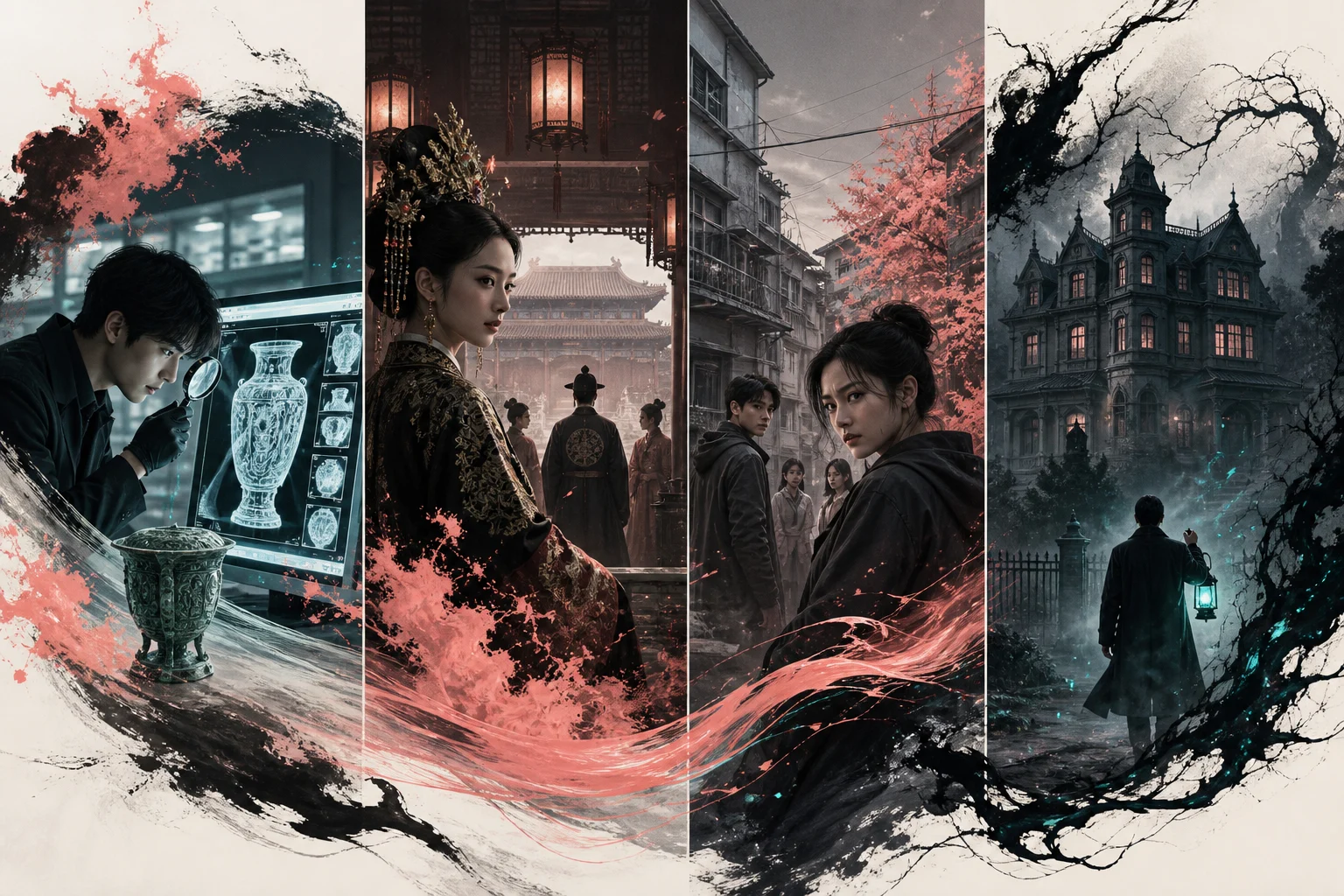
12 Chinese AI Short Dramas Trending in August 2026
A time-stamped guide to 12 Chinese AI short dramas trending in August 2026, from cultivation and mecha stories to romance, family healing, and genre collisions.
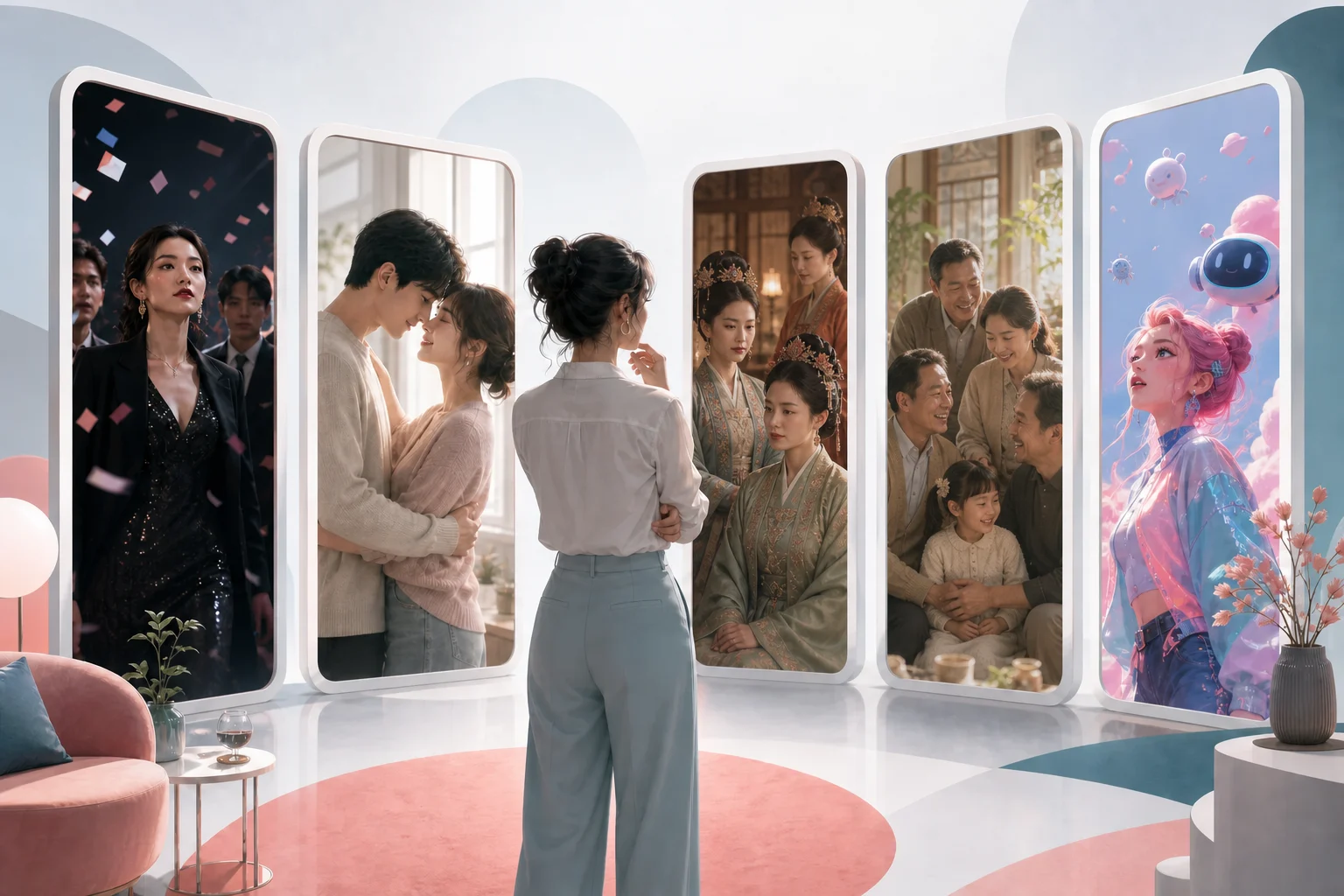
Best Chinese Short Dramas for Every Mood
A practical starter guide that matches ten Chinese short dramas to the payoff you want, with cast records and official viewing links where verified.